From the archive · A retrospective
The CIA Built a Robot Dragonfly. A Breeze Could Blow Its Cover.
A miniature engine made its wings beat; a laser was meant to guide it. Crosswinds kept the Insectothopter out of the field.
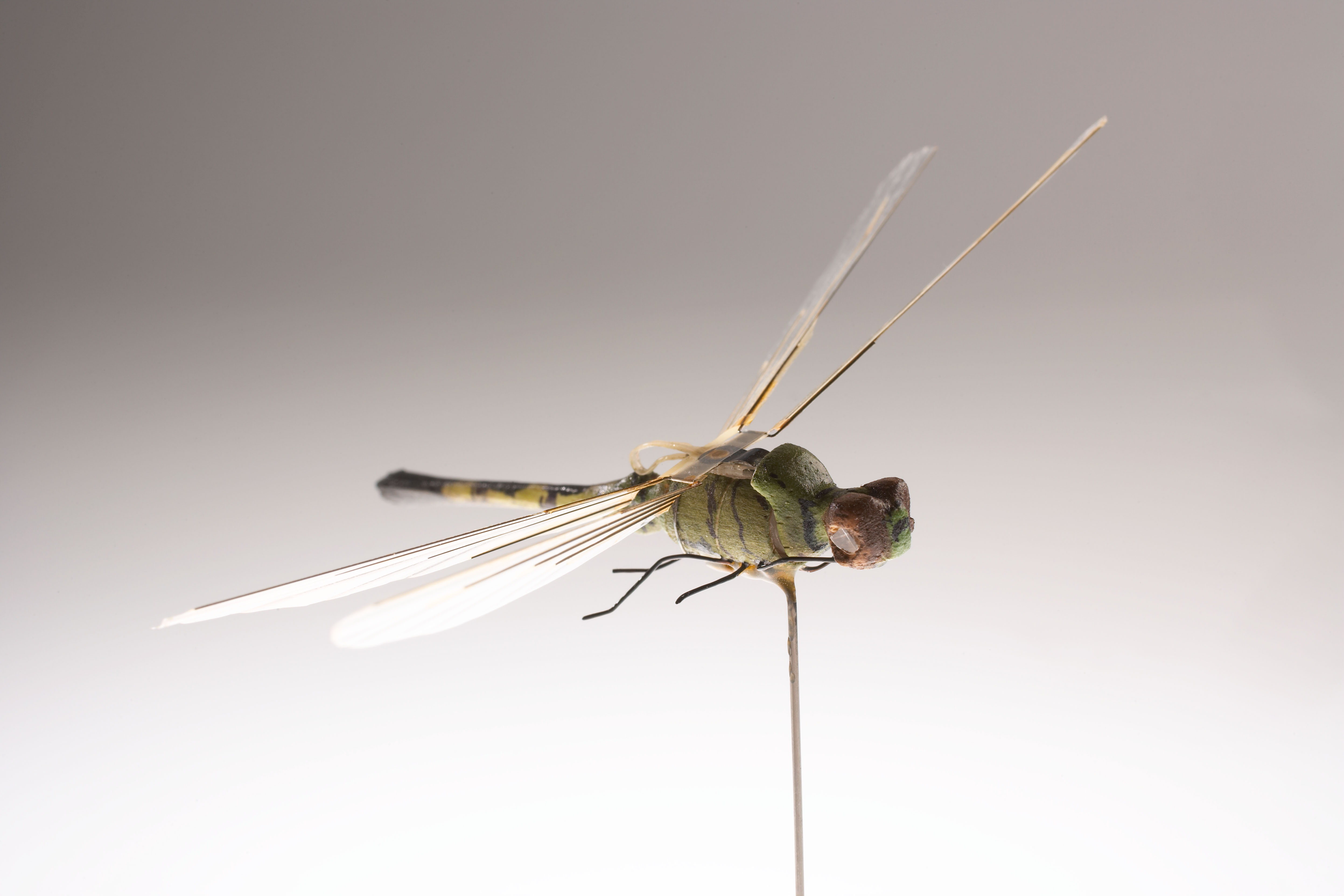
The CIA built a dragonfly that could fly 200 metres in a minute. It weighed a gram and had a fatal weakness: the weather. Crosswinds above five miles an hour knocked the Insectothopter off course. It never became operational.
Engineers developed the machine in the 1970s to deliver a miniature listening device. The initial bumblebee idea gave way to a dragonfly, whose flight was easier to imitate.
The choice had a useful biological logic. As historian Allison Marsh explained in IEEE Spectrum, real dragonflies can hover, glide and fly backwards. They also inhabit every continent except Antarctica. In the right season, the presence of one would give an observer little reason to investigate. The prototype’s six-centimetre body and nine-centimetre wingspan fitted within a real dragonfly’s dimensions.
A watchmaker crafted the device. Its fluidic oscillator drove the wings; propellant produced gas, with excess vented behind for thrust. A laser was intended to provide guidance and an audio data link. Spectrum cautioned that the public record left uncertainty about whether those functions were implemented.
Impressive flight tests left the operational problem unresolved. A device that loses its trajectory in a slight crosswind cannot reliably approach an outdoor target. The released museum photograph shows the tiny machine that remained a prototype.
Later dragonfly-inspired vehicles went further. Spectrum described Delft University’s DelFly Micro, a three-gram aircraft with a ten-centimetre wingspan, carrying a camera and transmitter. It set a Guinness record for the smallest camera plane in 2008. The CIA’s insect belongs to an earlier stage of that engineering history: a working flight experiment whose disguise had advanced further than its control.
The prototype dates to the 1970s; an exact first-flight day is not established. Laser functions are described as intended because the sources differ on their implementation.
Corrections & updates
24 Oct 2026 The historical index now uses the documented 1970s development period. The previous reference date described the museum photograph, rather than the aircraft’s development.
Sources & further reading
- InsectothopterCIA
- Meet the CIA’s InsectothopterIEEE Spectrum
SPY REGISTER MEMBERSHIP
Stay on the case.
Follow this story through the case files, read The Brief and keep your own saved reports.
$6.67 a month equivalent · $80 billed annually. Or $8 monthly.
Get the member edition →Renews automatically. Cancel renewal online.