From the archive · A retrospective
America’s Spy Satellite Dropped Its Secrets Into a Waiting Aircraft
CORONA photographed the Soviet Union from orbit. Reading the film required an extraordinary catch over the Pacific.
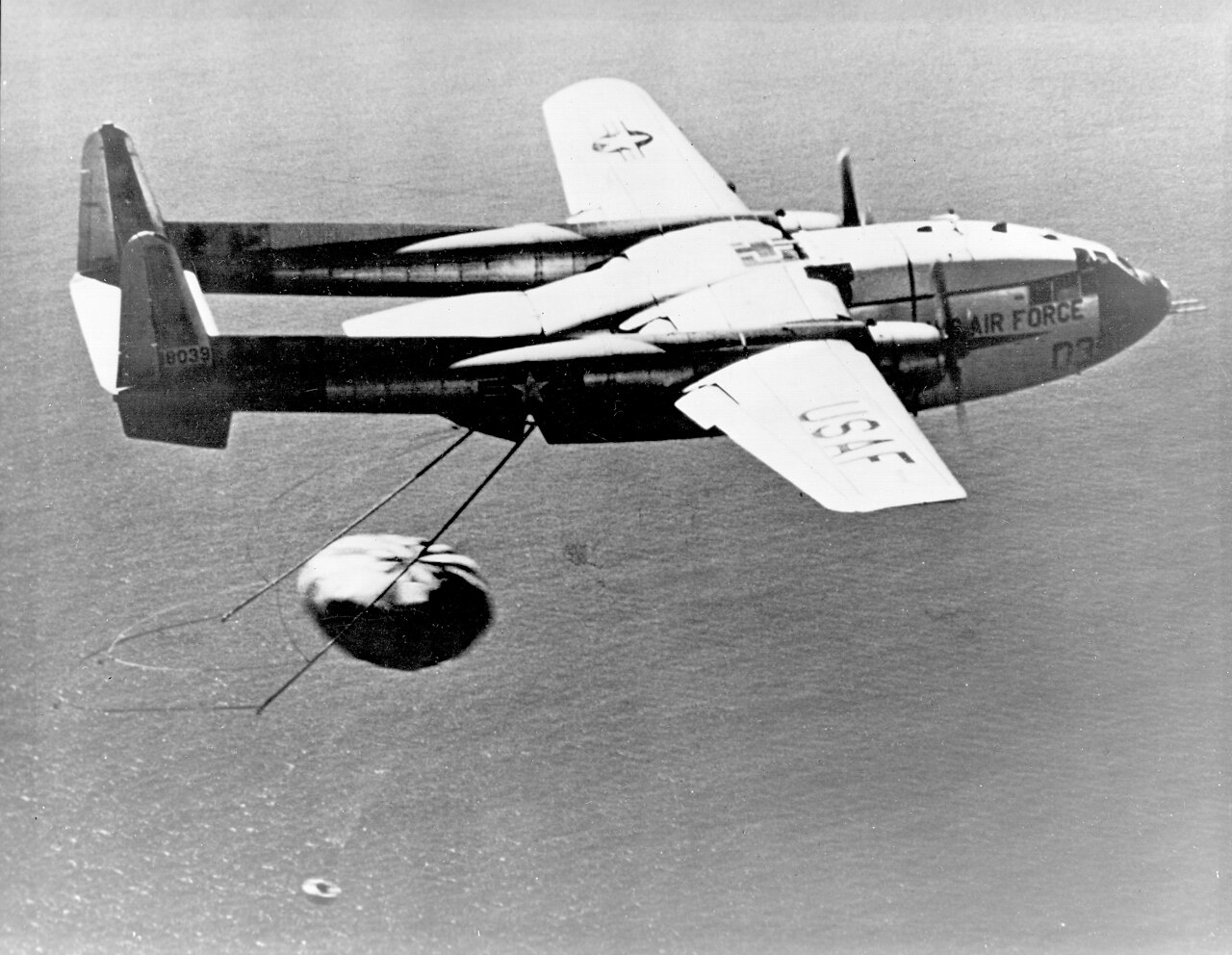
America’s first successful spy satellite needed a rescue from an aircraft before anyone could read its pictures. On 19 August 1960, a specially equipped Air Force C-119 caught the parachute carrying CORONA’s exposed film over the Pacific. Soviet territory had been photographed from orbit. The intelligence was still inside a falling capsule.
The CIA and Air Force had built CORONA to answer an expensive Cold War question: how large was the Soviet strategic force? Estimates of bombers and missiles carried enormous consequences for American defence spending. Washington needed photographs of places the Soviet government intended to keep hidden.
Getting a camera into orbit solved only part of the problem. CORONA used photographic film, which had to return physically to Earth for processing. The system packed the exposed roll into a recovery vehicle, sent it down through the atmosphere and opened a parachute for an aircraft to intercept.
The backup was deliberately temporary. According to the Army’s history, a capsule that reached the sea could float for two days while Navy boats searched. Salt plugs would then dissolve and send it to the bottom. A missed recovery could therefore destroy the intelligence before another power found it.
The first fully successful photographic mission launched on 18 August and returned its film the following day. The Army records approximately 20 pounds of film and coverage of more than 1.65 million square miles of Soviet territory. That single flight produced more imagery than the earlier U-2 missions combined.
The photographs began correcting the alarming assumptions that had helped drive the programme. CIA’s historical account says its interpreters found a Soviet intercontinental-missile programme behind American fears and a strategic bomber force with limited resources. The pictures gave policymakers a way to measure military construction instead of extrapolating from uncertainty.
CORONA’s cameras improved, and the programme accumulated a record of missile sites, air bases and submarine deployments. CIA credits the imagery with helping negotiators frame verifiable arms-control terms in 1971. The final capsule returned in May 1972. The system’s remarkable bargain had lasted twelve years: launch the camera into space, then send an aircraft to fetch the photographs.
The archive photograph shows a CORONA recovery; its precise exposure date is unspecified.
Sources & further reading
SPY REGISTER MEMBERSHIP
Stay on the case.
Follow this story through the case files, read The Brief and keep your own saved reports.
$6.67 a month equivalent · $80 billed annually. Or $8 monthly.
Get the member edition →Renews automatically. Cancel renewal online.