From the archive · A retrospective
Moscow’s Cipher Clerk Brought His Secrets to a Newspaper. The Paper Sent Him Away.
Igor Gouzenko’s 1945 defection exposed a Soviet network in Canada. His first problem was persuading anyone to listen.
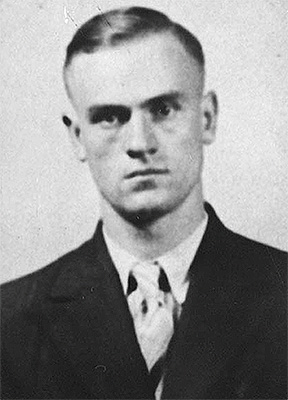
Igor Gouzenko left the Soviet Embassy in Ottawa on 5 September 1945 carrying documents that could expose Moscow’s intelligence operations. He took them to the Ottawa Journal. According to Parks Canada’s account, the newspaper regarded the story as dangerous and beyond a local paper’s scope. It suggested that he try the Department of Justice the next day.
The twenty-six-year-old cipher clerk wanted to defect with his family. His job in the embassy had given him access to the communications behind Soviet espionage. A National Counterintelligence Center history identifies him as a GRU officer working under cover as a translator and secretary in the Soviet military attaché’s office. He knew about operations directed against atomic projects and military production.
Approaching a government office brought more delay. Parks Canada says Justice Minister Louis St. Laurent wanted the allegations checked before meeting Gouzenko, mindful of good diplomatic relations with the Soviet Union. The defector was trying to buy protection with information. The people he approached were considering what accepting it might do to relations with a wartime ally.
The danger moved to his front door. The counterintelligence history records Gouzenko taking his wife and son to a neighbour’s apartment after a visitor left. Police subsequently found his own door forced open and four Soviet Embassy employees inside. The family went to the Royal Canadian Mounted Police on the morning of 7 September. Parks Canada dates their political asylum to that day.
Gouzenko’s documents and testimony exposed a Soviet military intelligence network in Canada. The counterintelligence history identifies Colonel Nikolai Zabotin, the military attaché, as its head and atomic-bomb information as a principal target. A royal commission was established in February 1946 to examine the disclosures. The affair connected a clerk’s decision to leave his embassy with a much wider reckoning over penetration of the Canadian state.
The public story acquired a second life: the informant had to remain hidden. Parks Canada records that Gouzenko received a new identity and lived with his family under police protection until his death in June 1982. His later public appearances concealed his face. The papers could be made public; the man who supplied them spent the rest of his life managing the consequences.
Accounts differ on the precise night Gouzenko removed the documents. The defection date follows Parks Canada. This account avoids disputed aggregate arrest and conviction totals.
Sources & further reading
- Gouzenko affairParks Canada
- A Counterintelligence Reader, Volume 2: Igor Sergeyevich GuzenkoFederation of American Scientists / source document archive
SPY REGISTER MEMBERSHIP
Stay on the case.
Follow this story through the case files, read The Brief and keep your own saved reports.
$6.67 a month equivalent · $80 billed annually. Or $8 monthly.
Get the member edition →Renews automatically. Cancel renewal online.