From the archive · A retrospective
MI5 Had to Make an Atom Spy Confess to Protect Its Codebreaking Secret
Klaus Fuchs helped build the bomb and passed its secrets to Moscow. Catching him required turning intelligence into a prosecution.
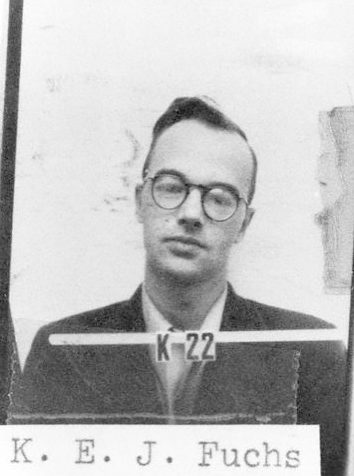
MI5 knew Klaus Fuchs was passing atomic secrets to the Soviet Union. The evidence that identified him came from a codebreaking project so sensitive that Britain could not reveal it in court. Investigators needed a confession.
The scientist had carried extraordinary access across the Atlantic. A refugee from Nazi Germany, Fuchs joined Britain’s Tube Alloys project and later the British mission to the Manhattan Project. At Los Alamos he worked in the theoretical division on the implosion weapon that became the Fat Man bomb.
He also maintained a channel to Moscow through Harry Gold. The National Museum of Nuclear Science & History describes Gold as the courier who carried Fuchs’s information from the Anglo-American atomic programme to Soviet intelligence. Fuchs returned to Britain after the war and continued nuclear work at Harwell.
The trail to him emerged through VENONA, the Anglo-American effort to read Soviet communications. Messages concerning meetings with Gold helped narrow the hunt. By 1949, MI5’s account says, the service had identified Fuchs as the mole.
Surveillance yielded little. From July 1949 the service intercepted his mail and telephone calls without finding incriminating material. Former Special Branch officer William Skardon approached through a personal concern: Fuchs’s father had accepted a university post in East Germany.
Meetings about the family connection gave Skardon time to gain the scientist’s confidence. In December 1949 he confronted Fuchs with MI5’s knowledge of his espionage. Fuchs initially denied it, then returned the following month with a confession he attributed to his conscience.
The account remained incomplete. MI5 says Fuchs admitted supplying crucial atomic-bomb secrets while withholding aspects of his espionage. He pleaded guilty under the Official Secrets Act and received fourteen years in prison.
He served nine. Released on 23 June 1959, he left for East Germany, where he became deputy director of a nuclear research institute. His scientific career continued on the other side of the Cold War.
The case joined two kinds of secret work: a scientist’s access to weapons research and cryptanalysts’ access to Soviet messages. A courtroom could expose both. Skardon’s patient approach supplied the confession needed to bring Fuchs’s spying into the open.
Fuchs's confession was partial. The article follows the documented conviction and intelligence history without claiming a precise number of years his espionage accelerated Soviet weapons development.
Sources & further reading
- Klaus FuchsMI5
- Klaus FuchsAtomic Heritage Foundation / National Museum of Nuclear Science & History
SPY REGISTER MEMBERSHIP
Stay on the case.
Follow this story through the case files, read The Brief and keep your own saved reports.
$6.67 a month equivalent · $80 billed annually. Or $8 monthly.
Get the member edition →Renews automatically. Cancel renewal online.