From the archive · A retrospective
Germany Offered Mexico Three American States. British Codebreakers Read the Offer.
The Zimmermann Telegram became a diplomatic weapon in 1917. London first had to hide how it had acquired it.
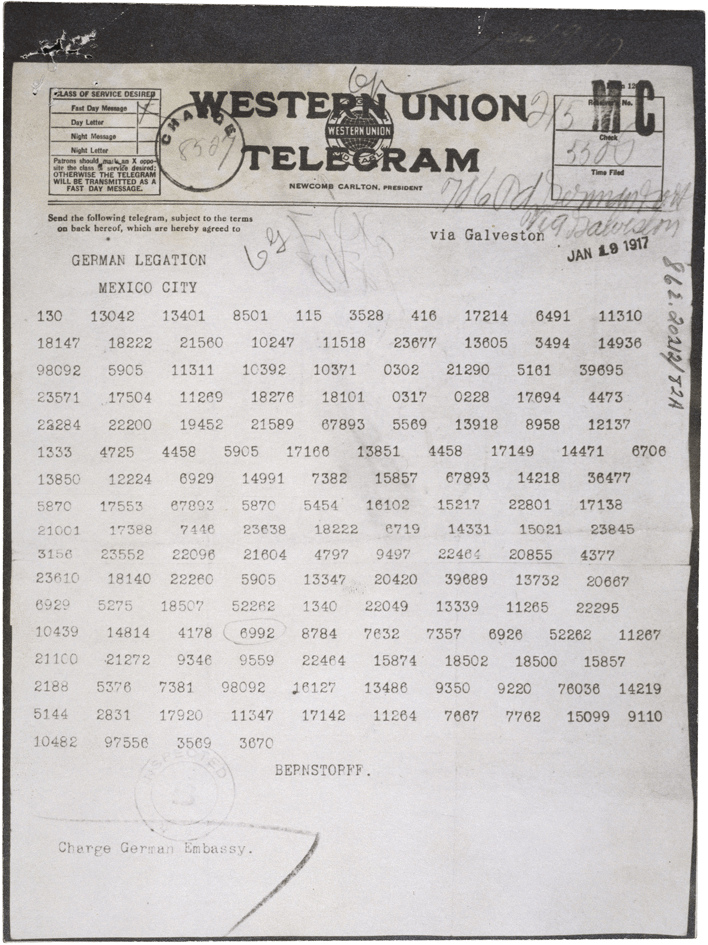
Germany sent its proposal for carving up the United States through a communications channel supplied by the American president. British codebreakers read it. The next problem was persuading Washington to act without admitting that Britain had been reading American diplomatic traffic.
The message, dispatched on 16 January 1917, offered Mexico an alliance if the United States entered the war against Germany. Texas, New Mexico and Arizona were the promised rewards. Germany was preparing unrestricted submarine warfare and wanted to complicate any American decision to intervene.
President Woodrow Wilson had allowed German diplomatic messages to travel through American channels in the hope of advancing peace. The British had already cut Germany’s direct transatlantic cables. Alternative routes carried traffic through Britain, where Room 40, the Admiralty’s codebreaking organisation, could examine it.
GCHQ’s account says a team including Nigel de Grey read the telegram on 17 January. Its contents had obvious diplomatic value. Using them also risked exposing both the interception of a neutral country’s communications and Britain’s ability to read German codes.
Admiral Hall, the director of naval intelligence, obtained another copy from the route between the German embassies in Washington and Mexico City. That version gave London a way to present the proposal while keeping its original access concealed.
The British presented the telegram to the American government on 24 February. Newspapers published it on 1 March, bringing Germany’s offer of American territory into the argument over intervention. Zimmermann publicly acknowledged that the message was genuine.
The United States had reasons of its own for moving toward war. Germany had broken its pledge to restrict submarine attacks, and Washington had severed diplomatic relations. The telegram sharpened the sense that the conflict threatened American interests directly. Congress declared war on 6 April.
Treating one intercepted message as the sole cause of American entry would exaggerate its power. Its importance lies in the combination of intelligence and presentation: a secret German offer became public evidence, while the British protected the codebreaking access that had revealed it.
The telegram contributed to US entry into the war alongside the submarine campaign and other political developments; no single-cause claim is made.
Sources & further reading
- How GCHQ's predecessors contributed to the US entering World War IGCHQ
- The Zimmermann TelegramUS National Archives
SPY REGISTER MEMBERSHIP
Stay on the case.
Follow this story through the case files, read The Brief and keep your own saved reports.
$6.67 a month equivalent · $80 billed annually. Or $8 monthly.
Get the member edition →Renews automatically. Cancel renewal online.