From the archive · A retrospective
A German Operator Repeated a Message. Britain Rebuilt His Secret Cipher Machine.
One breach of procedure gave Bletchley Park an opening into the communications of the German High Command.
The German message had arrived badly. On 30 August 1941, the operator sent it again, using the same cipher-wheel settings. He also shortened parts with abbreviations. That combination gave British codebreakers a way into a system they had never seen.
Colonel John Tiltman worked through the material by hand. The National Museum of Computing says he broke the message in ten days. The repeated transmission had supplied an accidental comparison between two versions encrypted under the same conditions.
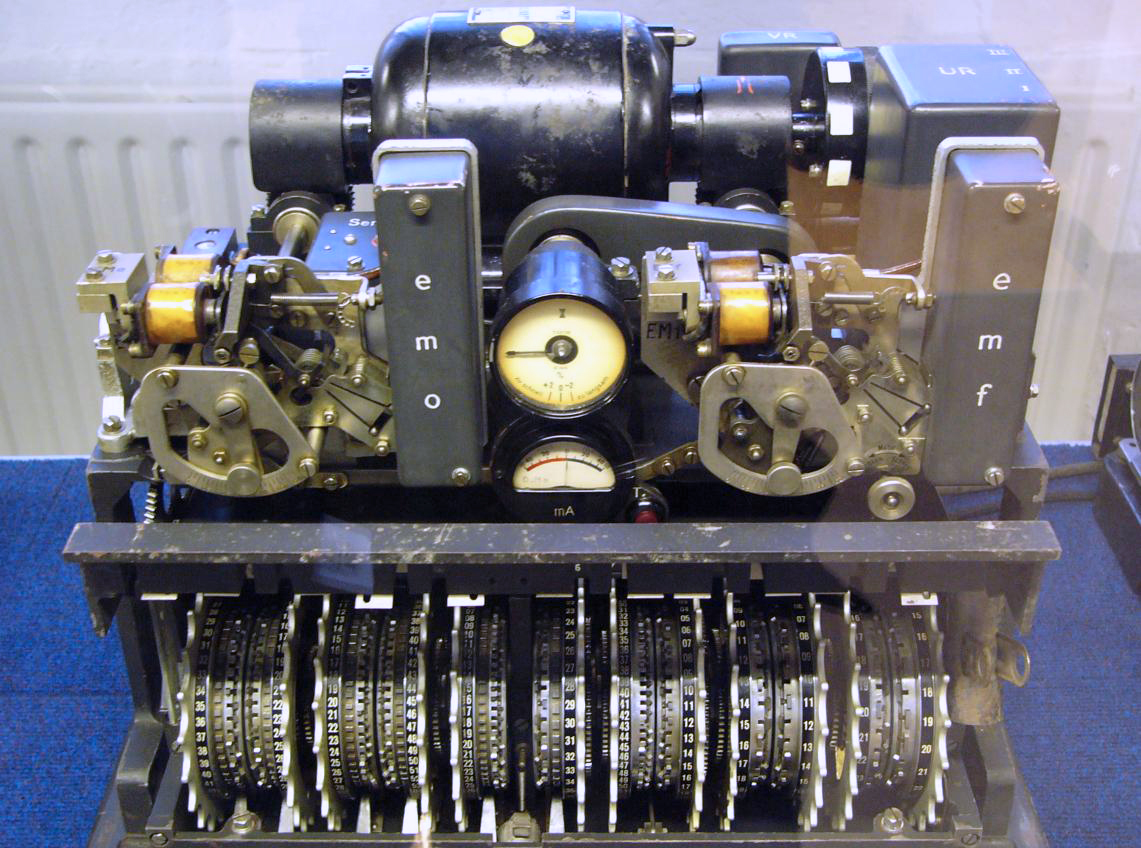
The harder prize was the machine behind the message. Bill Tutte and his colleagues had intercepted output and Tiltman’s manual decrypts. From those, they deduced the logical structure of Lorenz, the twelve-rotor device used to protect high-command teleprinter communications.
Tutte had arrived at Bletchley Park in May 1941 after studying chemistry at Cambridge. His tutor recommended him for the Government Code and Cypher School. GCHQ identifies his reconstruction of Lorenz’s internal structure, followed by a mathematical approach to its wheel patterns, as his outstanding wartime achievement.
The practical result was Tunny, a British re-engineering of the unseen German system. Designed at the Post Office Research Station in 1942, it could produce the final plaintext once the codebreakers had established the settings. The museum says nobody at Bletchley saw a Lorenz machine until one was captured after the war.
Tiltman brought a different kind of experience to the partnership. In India between the wars, his small section attacked Soviet diplomatic traffic. He worked across interception, traffic analysis, cipher diagnosis, translation and assessment. GCHQ’s account describes a cryptanalyst who understood the chain from radio operator to intelligence user.
At Bletchley he founded the military section and remained its head through the war. His initial manual break gave Tutte material from which to infer a sophisticated electromechanical design.
Reading individual messages still required labour. The attack on Lorenz grew into an industrial process, drawing on manual methods and then machines including Heath Robinson and Colossus. The intellectual reconstruction came first: understand the cipher’s hidden mechanism, then build equipment capable of exploiting it.
The surviving Lorenz machines can now be inspected in museums. The wartime achievement ran in the opposite direction. British specialists worked backward from intercepted signals until they could reproduce the behaviour of equipment kept inside an enemy headquarters.
The account distinguishes the manual message break, Tutte's logical reconstruction, Tunny's final decryption role and the later mechanisation; these were separate contributions.
Sources & further reading
- Tunny and Heath RobinsonThe National Museum of Computing
- William Thomas Bill TutteGCHQ
- Brigadier John TiltmanGCHQ
SPY REGISTER MEMBERSHIP
Stay on the case.
Follow this story through the case files, read The Brief and keep your own saved reports.
$6.67 a month equivalent · $80 billed annually. Or $8 monthly.
Get the member edition →Renews automatically. Cancel renewal online.