From the archive · A retrospective
Six Men Paddled Into Singapore Harbour. Seven Ships Paid the Price.
A captured fishing boat carried Allied raiders through Japanese-held waters in 1943. Its disguise survived an encounter with a destroyer at barely 100 yards.
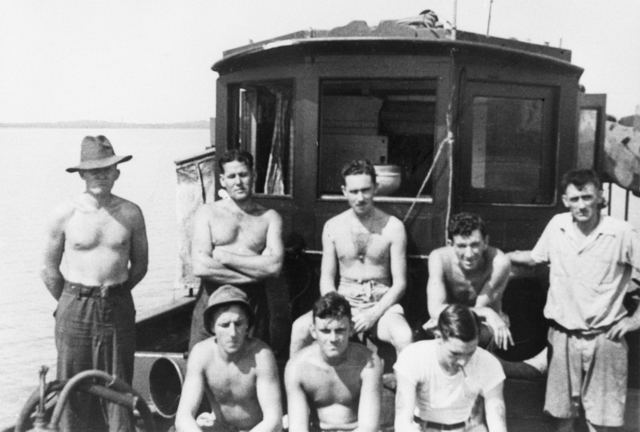
On the return voyage from Singapore, the fishing boat carrying the raiders met a Japanese destroyer in the Lombok Strait. The warship came within 100 yards. According to the Australian War Memorial, Krait’s disguise satisfied the Japanese sufficiently for it to continue. The crew had already attacked shipping in one of Japan’s most important occupied harbours. A wooden fishing vessel helped them get home.
Operation Jaywick exploited the appearance of an ordinary working boat. Krait had belonged to a Japanese fishing company in Singapore under the name Kofuku Maru. After Singapore fell, it helped rescue evacuees from ships sunk off Sumatra, carrying about 1,100 people during that period. It subsequently reached India and Australia. Its origins made it useful for a different journey back into Japanese-controlled waters.
Major Ivan Lyon commanded the mission. His party travelled from Exmouth in Western Australia toward Subor Island, near Singapore, disguised as Malay fishermen. The voyage took more than three weeks. Krait was slow, wooden-hulled and intermittently troubled by its engine. Getting the assault team close enough required maintaining the deception through a long approach.
On 26 September 1943, six men set off in three collapsible two-man canoes. They reached the harbour after dark and separated to move between ships, attaching magnetic limpet mines. The weapons would explode after the men had begun their escape. The War Memorial’s account records seven vessels sunk or badly damaged. The attack brought a small clandestine party into direct contact with a concentration of enemy shipping.
The canoeists still had to find their way back. They paddled another 80 kilometres before rejoining Krait on 2 October, six days after the attack. The boat then carried the men toward Australia, surviving the destroyer encounter on the way. It reached home on 19 October. The memorial describes a 48-day mission covering roughly 4,000 nautical miles.
Historical accounts vary in their descriptions of the total party and shipping losses. This account identifies the six-man canoe assault team and uses the War Memorial’s formulation of seven vessels sunk or damaged.
Sources & further reading
- Operation JaywickAustralian War Memorial
- MV KraitAustralian War Memorial
- History of MV Krait and Operation JaywickAustralian War Memorial
SPY REGISTER MEMBERSHIP
Stay on the case.
Follow this story through the case files, read The Brief and keep your own saved reports.
$6.67 a month equivalent · $80 billed annually. Or $8 monthly.
Get the member edition →Renews automatically. Cancel renewal online.