From the archive · A retrospective
A Fake Water Shortage Helped Nimitz Set Japan’s Midway Trap
American codebreakers planted a lie where Japanese intelligence could find it.
The Americans wanted Japan to overhear a lie. Midway would announce a problem with its fresh water, using an unencrypted message the enemy could read. If Japanese intelligence repeated the news under the island’s secret designation, American codebreakers would have the confirmation they needed before committing the fleet.
In the spring of 1942, intercepted Japanese naval communications pointed to a major operation against a target called AF. Analysts at Pearl Harbor believed it meant Midway. Others considered alternatives, including another attack on Hawaii or a move elsewhere in the Pacific. An ambiguous pair of letters stood between intelligence and a decisive operational judgment.
The codebreakers had penetrated enough of JN-25, Japan’s naval communications system, to extract useful information about the coming operation. That success produced another problem: interpreting the messages correctly. Knowing what an opponent has written can still leave the identity of the place, ship or person inside the message uncertain.
NSA’s account attributes the water-shortage idea to a conversation between Joseph Rochefort, who led the cryptanalytic unit at Pearl Harbor, and analyst Jasper Holmes. The plan used Japanese interception against Japan. A report planted in open communications could reappear in protected enemy traffic, identifying the target without requiring another leap of interpretation.
The National WWII Museum describes a second audience for the operation: skeptical naval intelligence officers in Washington. Its historians say confirmation helped Admiral Chester Nimitz position his forces to meet Japan’s approaching fleet. The point was to turn a codebreaker’s reading into information that commanders could act upon.
On 22 May 1942, according to NSA’s history, the American radio intelligence unit in Melbourne published a translation of a Japanese message concerning the water supply. The agency presents that intercept as confirmation that AF was Midway. The battle opened in early June; American forces destroyed four Japanese aircraft carriers.
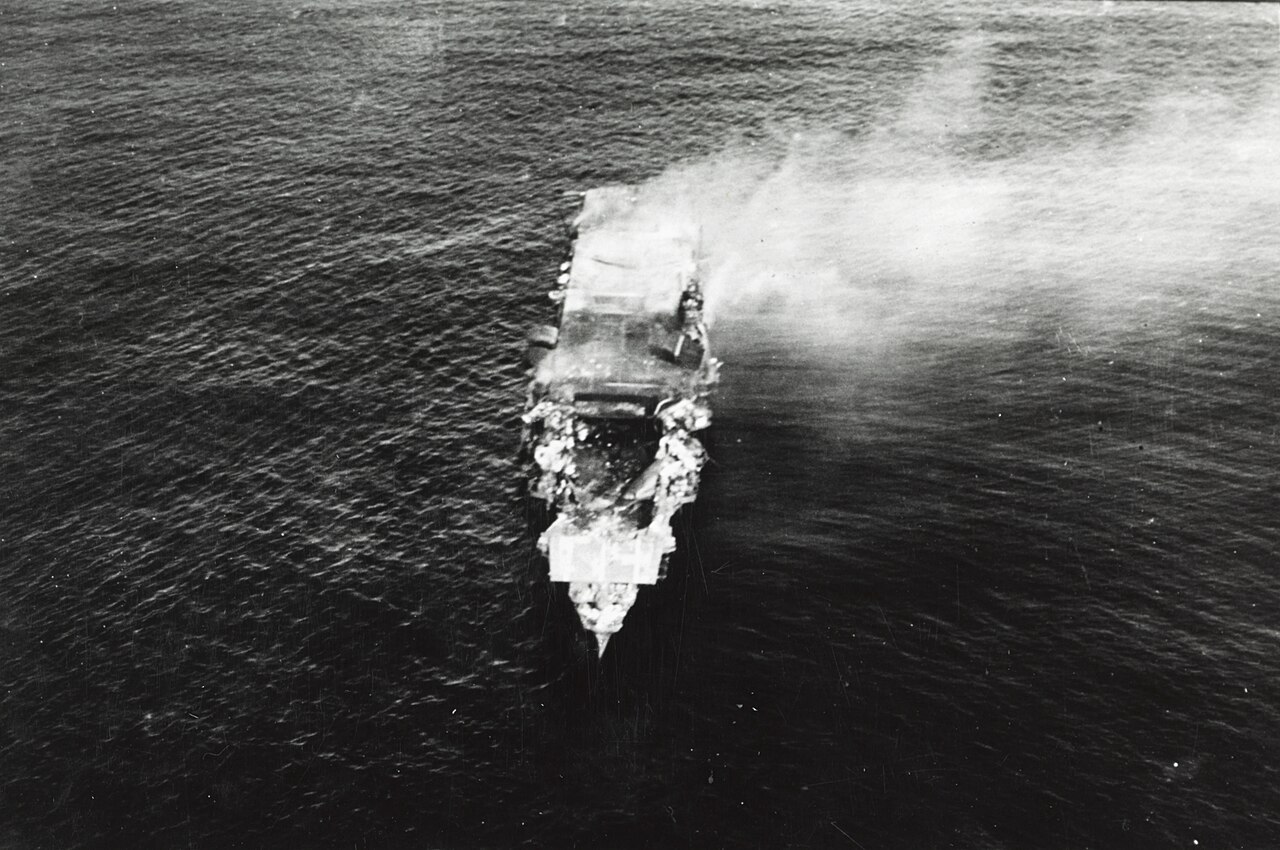
The burning carrier Hiryu, photographed from a Japanese aircraft on 5 June, records the physical consequence of that encounter. Intelligence helped the Americans prepare an ambush across an immense ocean. The water message occupies a smaller, more precise place in the story: it tested a disputed interpretation before the fleets met.
The water-message reconstruction follows NSA’s historical account.
Sources & further reading
- Water ShortageNational Security Agency
- Part 2: Breaking the Midway CodeNational WWII Museum
SPY REGISTER MEMBERSHIP
Stay on the case.
Follow this story through the case files, read The Brief and keep your own saved reports.
$6.67 a month equivalent · $80 billed annually. Or $8 monthly.
Get the member edition →Renews automatically. Cancel renewal online.