From the archive · A retrospective
Moscow Gave America Its Own Seal—with a Spy Inside
Soviet schoolchildren delivered the gift. An American ambassador hung it in his office. The listening device stayed hidden until 1952.
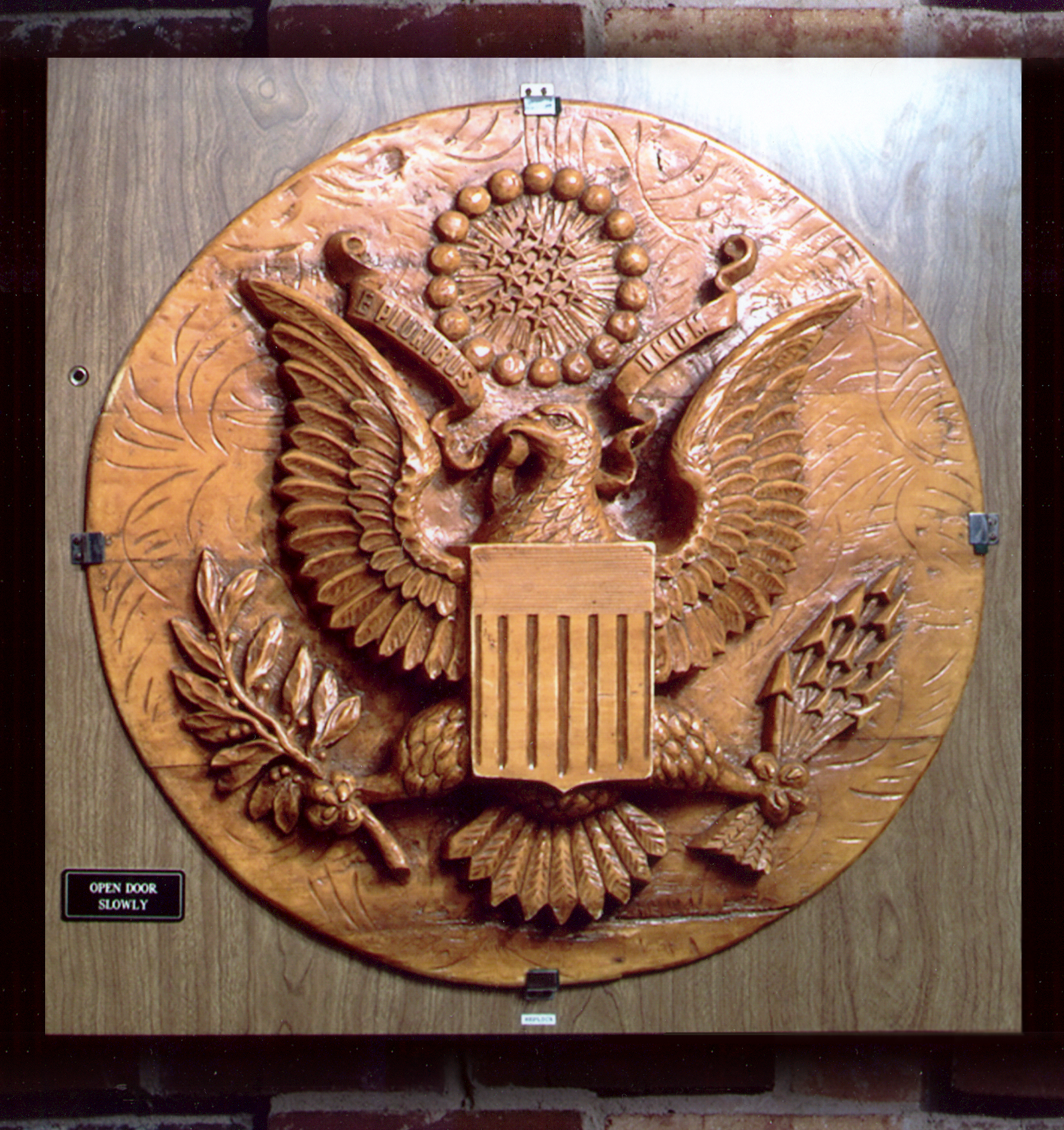
The eagle on the wall was listening. A carved Great Seal of the United States, presented to Ambassador W. Averell Harriman in Moscow in 1945, concealed a Soviet microphone inside an emblem of American authority. The gift remained in the ambassador’s residential office until a technical sweep uncovered it in 1952, according to the CIA’s historical account.
The delivery was part of the deception. The National Cryptologic Museum dates the presentation to August 4, 1945, and identifies the bearers as Soviet schoolchildren. A ceremonial gift from children had secured a position inside the room where the United States conducted sensitive diplomatic business.
Investigators faced an unusual device. The hidden microphone needed an outside radio signal to operate and became extremely difficult to detect when that signal stopped. The museum’s explanation makes the consequence clear: a sweep conducted while the equipment lay dormant could miss what was sitting on the wall.
The CIA says the device had neither batteries nor wires of its own. Its discovery came during George Kennan’s ambassadorship. The agency acknowledges that the amount and content of the information compromised remain difficult to determine; the dates alone cannot establish years of uninterrupted recording.
Washington then kept the discovery quiet. The CIA’s account says officials wanted time to examine the technology and preserve potential diplomatic leverage. That opportunity arrived after the Soviet Union shot down Francis Gary Powers’s U-2 reconnaissance aircraft on May 1, 1960.
On May 26, Henry Cabot Lodge brought a replica of the bugged seal before the United Nations Security Council as Moscow denounced American espionage. The object in the diplomatic showdown was a replica; the National Cryptologic Museum likewise identifies its own display as a reproduction molded from the original. The surviving exhibition lets visitors see the cavity concealed behind the national emblem.
Historical retrospective. The sources do not establish exactly which conversations were intercepted or continuous operation throughout the device’s time in the residence. Museum displays and Lodge’s 1960 demonstration used replicas.
Sources & further reading
- Compromise of the Great SealCIA
- Cold War: Great SealNational Security Agency
SPY REGISTER MEMBERSHIP
Stay on the case.
Follow this story through the case files, read The Brief and keep your own saved reports.
$6.67 a month equivalent · $80 billed annually. Or $8 monthly.
Get the member edition →Renews automatically. Cancel renewal online.