From the archive · A retrospective
Britain’s Enigma Expert Threw a Tantrum When Poland Showed Him the Answer
The July 1939 meeting outside Warsaw exposed how far Polish codebreakers had advanced—and helped turn Britain toward the methods Enigma required.
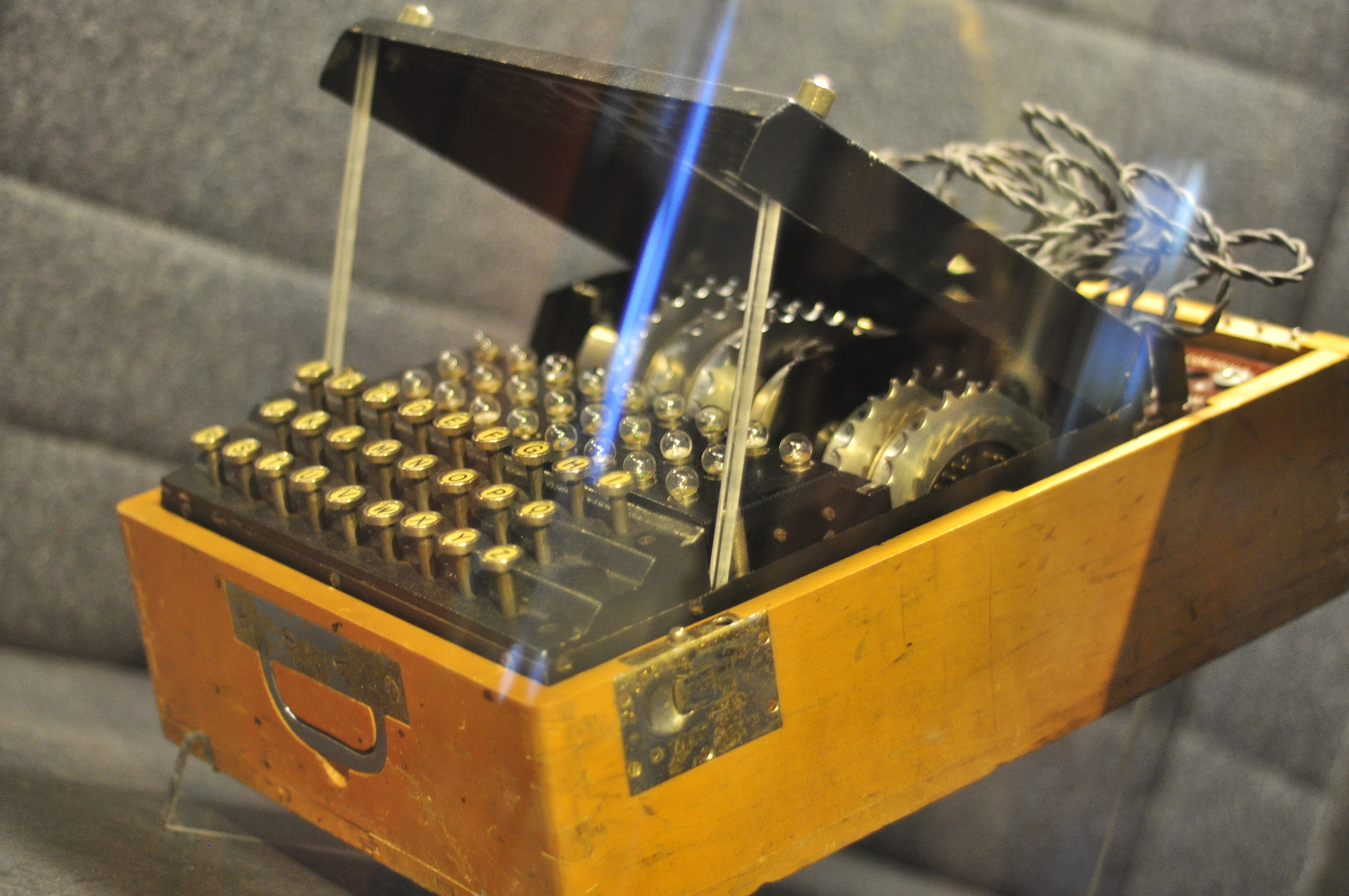
Dilly Knox had spent years attacking Enigma. In Poland in July 1939, he learned that the variable he had failed to solve involved a simple alphabetical order. His reaction, GCHQ later acknowledged, was a tantrum.
The episode could have ended as a story of wounded professional pride. Knox also bought gifts for the Polish cryptanalysts. The relationship he developed with Marian Rejewski helped carry Polish knowledge into Britain’s wartime attack on German communications.
British, French and Polish specialists met outside Warsaw on 25 and 26 July. An earlier meeting in Paris had produced little sharing. By summer, Britain and France had pledged to support Poland against invasion, and the Poles were prepared to explain their progress.
Britain sent Alastair Denniston, head of the Government Code and Cypher School, and Knox, its leading Enigma specialist. They discovered that their hosts were ahead in the amount of traffic read and in the machinery built to help read it.
Knox had developed paper methods using cardboard rods to model rotor alignments. These had worked against a commercial Enigma variant used by Franco’s forces. According to the account delivered by GCHQ director Iain Lobban in 2014, those techniques could neither scale adequately nor defeat the military improvements Britain now faced.
France contributed a different kind of intelligence: an agent inside Germany supplied handbooks and key material. The Poles brought mathematical analysis and machines. Rejewski’s team had worked out rotor wiring, constructed replicas and developed the electromechanical bomba to assist cryptanalysis.
German changes had already reduced Polish success. Sharing the breakthrough gave the allies a stronger starting point as the technical problem continued to evolve. GCHQ’s history credits the knowledge gained in Poland with transforming the British approach.
After Poland fell, its cryptanalysts continued work in France. Alan Turing travelled to Paris in January 1940 to meet them; his discussions with Rejewski helped develop the thinking behind the British Bombe. The device was operating at Bletchley Park by the time Germany launched its offensive in the West.
Knox’s anger survived as an anecdote. The transfer of knowledge survived as a working relationship. Britain’s eventual codebreaking success grew from those exchanges, with mathematical methods, agent intelligence and engineering brought into the same fight.
GCHQ's later historical account dates the meeting25–26 July1939. Its2014 speech contains a conflicting15–16 July reference, while its own background gives25–26; the article follows the later account and background.
Sources & further reading
SPY REGISTER MEMBERSHIP
Stay on the case.
Follow this story through the case files, read The Brief and keep your own saved reports.
$6.67 a month equivalent · $80 billed annually. Or $8 monthly.
Get the member edition →Renews automatically. Cancel renewal online.