OpenAI’s Spy Scandal Has a Face
An engineer accused of planting a recorder in OpenAI’s executive conference room was filmed looking behind the TV. Prosecutors identify him as Abdulrahman Alfozan, charged with intercepting communications.
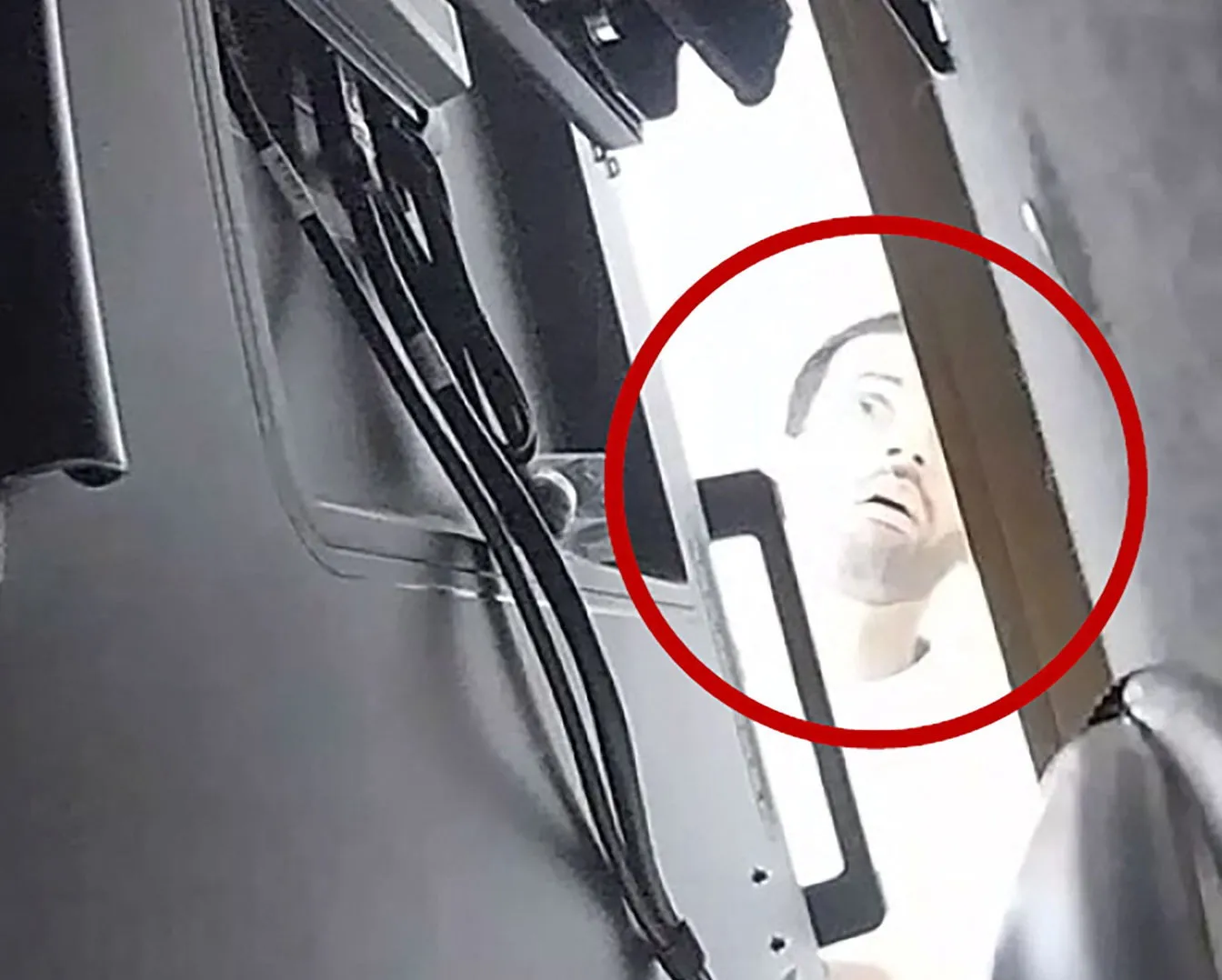
OpenAI had already found the recorder when Abdulrahman Alfozan looked behind the television. In the surveillance image released by federal prosecutors, the engineer peers into the space where they say the device had been hidden.
The sequence is what makes the photograph striking. According to the Justice Department, personnel discovered the recorder on September 30, concealed in toilet paper and plugged into a USB port behind a conference-room TV. The surveillance image is dated October 5. Alfozan was arrested on October 9 and charged with using or attempting to use a device to intercept conversations.
Prosecutors say the executive conference room hosted discussions of confidential research, product plans, company strategy and government engagements. The alleged placement would have put a microphone beside conversations about some of OpenAI’s most closely guarded work.
Alfozan’s attorney told The Wall Street Journal the accusations were wholly out of character and emphasized that the charge concerned recording communications. The allegations remain unproven. The cited charge concerns alleged interception; it does not establish trade-secret theft or foreign-agent activity.
OpenAI told the Associated Press it fired the employee and referred the discovery to the FBI. The company said it used its own models to investigate the device and identify who had placed it. At the time of that statement, it reported no indication that model weights, source code or customer data had been improperly accessed or taken.
The case has since produced a detention fight over alleged Saudi connections. Reuters reported on October 19 that prosecutors cited royal-family contacts and travel arrangements as they sought continued custody. Defense lawyer William Pernik said a planned Saudi trip predated the investigation and concerned family and immigration matters. A separate report on Spy Register follows the detention proceedings.
The case arrived amid broader warnings about espionage against AI companies. OpenAI had told employees that outsiders might offer money, listen to conversations in cafés or use sex and romance to approach them, according to Journal reporting published by Mint. People familiar with the training described precautions against competitors and state-sponsored actors. Employees at Anthropic and Google received similar warnings.
Other instructions are less glamorous and considerably easier to follow: keep company logos off clothing worn outside the office, shield laptop screens on public transport and erase whiteboards after meetings. The Journal reported that the whiteboard warning reflects concern about compromised cleaning or kitchen staff. OpenAI said its security team covers physical protection, insider risk and information security.
The warning reaches into the most ordinary parts of an employee’s life. One scenario presented to staff involves a stranger who repeatedly appears at a San Francisco playground with a child, befriends an OpenAI worker there with their own child and starts asking about work. In the training account, the stranger is a spy.
The Journal also described an anecdote used to explain seduction operations. A U.S. diplomat in Russia supposedly rejected a woman who arrived at his hotel room with Champagne; the operation then tried another woman and a young man. These are accounts used in security training. The reporting does not independently establish those encounters as documented operations against AI employees.
Corrections & updates
23 Oct 2026 Lead photograph updated to the Justice Department surveillance image identifying Alfozan looking behind the conference-room television on October 5, 2026.
23 Oct 2026 Headline, standfirst and opening rewritten around the surveillance image and the recording-device case. Broader staff security warnings follow as context; the photograph, original publication date and canonical URL are preserved.
23 Oct 2026 Front-page headline and standfirst sharpened around the surveillance photograph, preserving attribution and the distinction between the criminal accusation and established guilt.
Sources & further reading
- Ex-OpenAI employee accused of planting device appears to have Saudi backing, US prosecutors sayReuters
- AI companies play cat-and-mouse with secret-stealing spies — WSJ via MintThe Wall Street Journal via Mint
- DOJ: OpenAI recording-device chargeU.S. Department of Justice · National Security
- AP: OpenAI response to recording-device caseABC News
SPY REGISTER MEMBERSHIP
Stay on the case.
Follow this story through the case files, read The Brief and keep your own saved reports.
$6.67 a month equivalent · $80 billed annually. Or $8 monthly.
Get the member edition →Renews automatically. Cancel renewal online.