From the archive · A retrospective
A Paperboy Dropped a Nickel. Moscow’s Secret Fell Out.
A five-cent coin split open on a Brooklyn floor in 1953. The coded message inside defeated the FBI for four years.
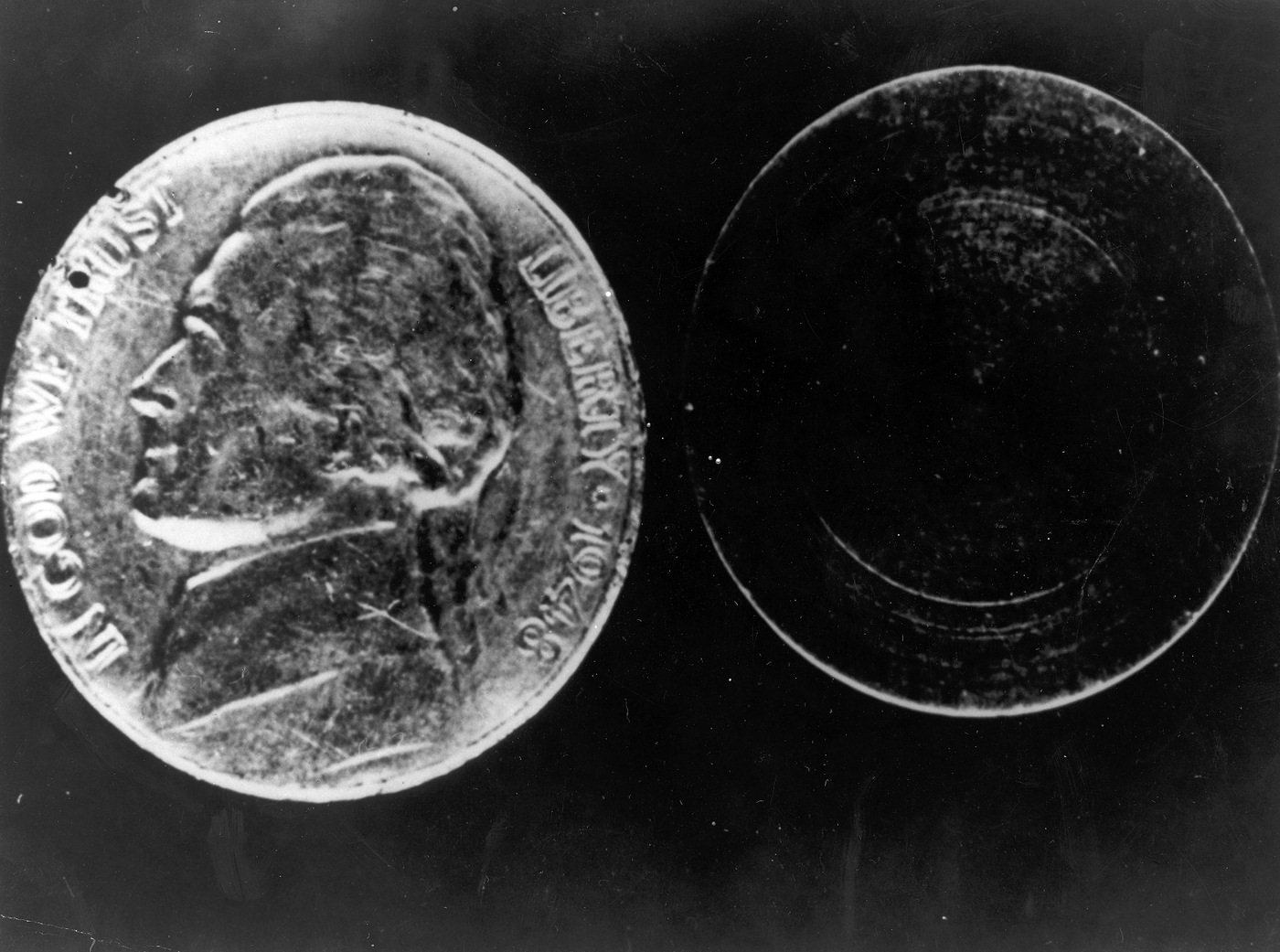
A Brooklyn paperboy went to collect newspaper money and came away with a Soviet spy’s message. On June 22, 1953, a nickel he had received in change fell to the floor and split apart. Inside sat a tiny photograph of columns of numbers. The FBI’s case history traces a major counterintelligence investigation to that accidental discovery.
The boy, identified in the bureau’s account as Jimmy, noticed that the coin sounded odd and felt unusually light. Police passed it to the FBI. Laboratory examination revealed a miniature coded message. Investigators now possessed an extraordinary piece of espionage equipment, with little to tell them who had carried it or what it said.
For four years, the message resisted them. Investigators examined other unusual coins and pursued possible connections without resolving the mystery. The breakthrough came from a person: Soviet intelligence officer Reino Hayhanen, who approached the American embassy in Paris in May 1957 after being ordered back to Moscow.
Hayhanen’s disclosures enabled the FBI to identify the nickel’s connection to Soviet operations and decode its contents. The message welcomed him to America and discussed funding for his cover. A routine communication between spies had survived as a puzzle on the other side of the counterintelligence divide.
The defector also helped investigators find his superior. The man living as Brooklyn photographer Emil Goldfus was Vilyam Fisher, the Soviet intelligence officer better known as Rudolf Abel. The bureau’s separate artifact history describes a search that produced radios, cipher materials, cameras and containers disguised as everyday possessions.
Fisher was arrested in June 1957 and convicted of espionage-related offenses that year. He later became the prisoner exchanged for captured American U-2 pilot Francis Gary Powers. The FBI’s archive photograph preserves the object that started the case: an opened nickel beside its concealed message, ordinary change converted into a secret communications channel.
Historical retrospective based on FBI records. The nickel’s discovery preceded the decoding by four years; the story does not claim that the paperboy immediately exposed or identified an entire spy ring. Sentence length is omitted because the two FBI pages disagree.
Sources & further reading
- Hollow Nickel/Rudolf AbelFederal Bureau of Investigation
- Rudolf Abel and the Hollow Nickel CaseFederal Bureau of Investigation
SPY REGISTER MEMBERSHIP
Stay on the case.
Follow this story through the case files, read The Brief and keep your own saved reports.
$6.67 a month equivalent · $80 billed annually. Or $8 monthly.
Get the member edition →Renews automatically. Cancel renewal online.