From the archive · A retrospective
The CIA Raided a Soviet Ice Station and Hooked Its Men Out of the Arctic
Operation COLDFEET recovered 150 pounds of documents, film and equipment. Getting the collectors home required a balloon, a line and a passing B-17.
The wind dragged Leonard LeSchack across the Arctic ice before a passing B-17 caught the line that would pull him into the sky. He had been searching an abandoned Soviet research station for intelligence. By the time the aircraft retrieved him on 2 June 1962, Operation COLDFEET had recovered a canvas bag of documents, exposed film and equipment samples weighing about 150 pounds.
The opportunity had appeared when Soviet researchers abandoned a drifting station after its runway broke up. The Office of Naval Research wanted to examine the Russians’ work, including possible means of detecting submarines beneath polar ice. Historian William Leary’s account for the CIA describes a mission repeatedly frustrated by weather, the shifting target and exhausted funding. The operation eventually focused on station NP 8.
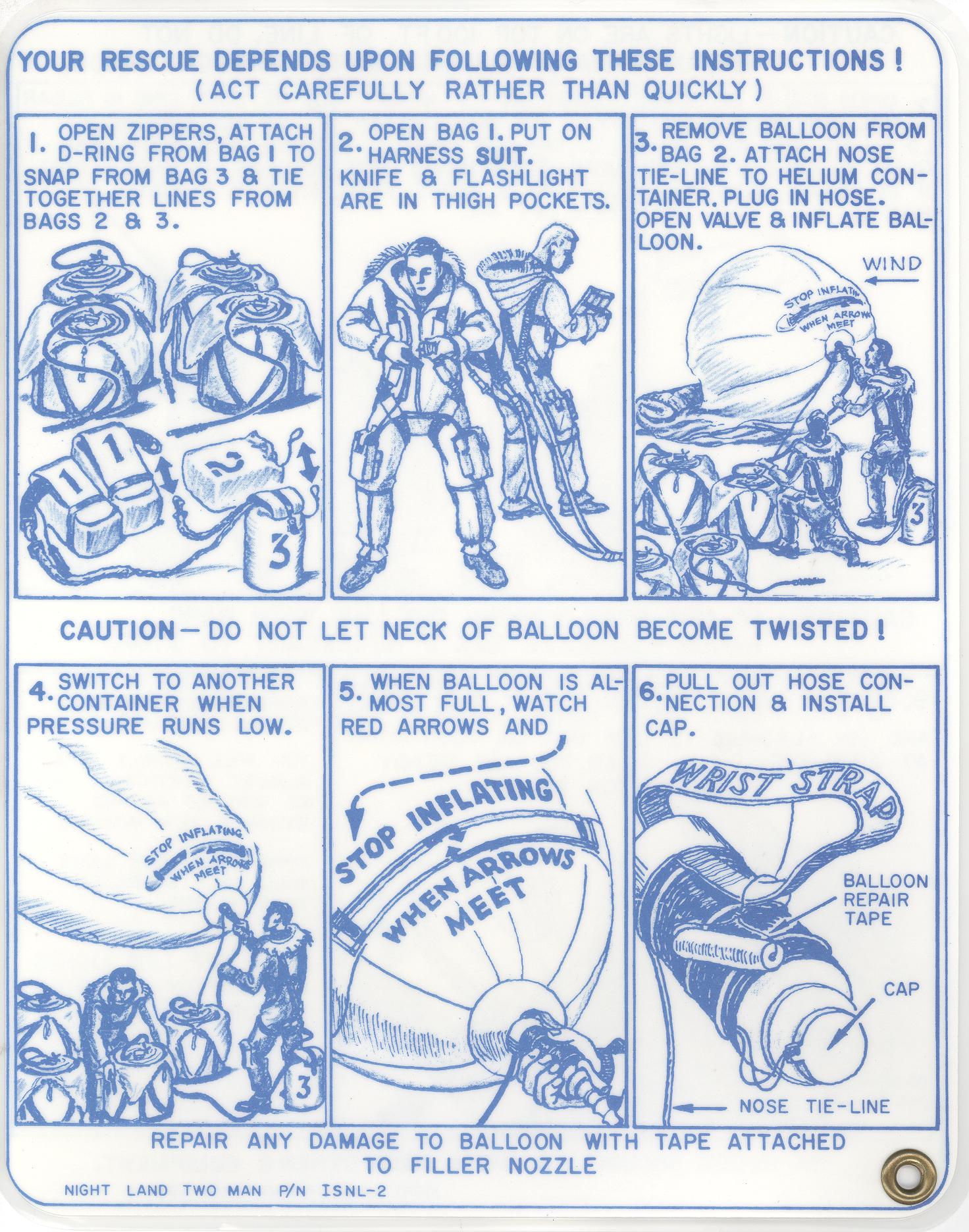
On 28 May, James Smith, an Air Force major and Russian linguist, parachuted onto the ice with LeSchack, a naval reserve officer and geophysicist. A conventional landing offered no safe exit. Their recovery depended on Fulton’s Skyhook: the men would attach themselves to a line held aloft by a helium balloon, then wait for the aircraft to catch it.
The system had acquired its final form in 1958. Its equipment could be dropped in a package: harness, 500-foot nylon line, balloon and portable helium bottle. Steel horns projecting from the aircraft’s nose would snare the line; a powered winch brought the load aboard. CIA’s history traces the idea back to aerial mail collection for communities without suitable airfields.
Testing had included an angry pig and then Marine Staff Sergeant Levi Woods, the first human Skyhook test subject on 12 August 1958. The initial lift delivered less of a jolt than opening a parachute. Extending the arms and legs helped control spinning while the aircraft crew reeled the person in.
At NP 8, the bag of intelligence went first. Both men followed, despite strong winds and poor visibility. The material helped the Americans assess Soviet acoustic work, polar meteorology and oceanography. The expedition also demonstrated that collectors could reach an otherwise inaccessible site and leave it by air. Smith’s welcome aboard included a drink of Scotch.
The detailed narrative follows William Leary’s CIA-published historical reconstruction. He notes variation among participants’ accounts; precise dialogue and unverified quotations are omitted.
Sources & further reading
SPY REGISTER MEMBERSHIP
Stay on the case.
Follow this story through the case files, read The Brief and keep your own saved reports.
$6.67 a month equivalent · $80 billed annually. Or $8 monthly.
Get the member edition →Renews automatically. Cancel renewal online.